


Ammonia
Ammonia, or Anhydrous Ammonia (meaning water-free ammonia), has the chemical formula $NH_3$. It is a chemical compound consisting of one nitrogen atom and three hydrogen atoms per molecule. It is a colorless gas with a characteristic pungent odor and a high purity level exceeding 99.5%. Due to its low boiling point, ammonia is typically stored as a liquefied gas under pressure.
Properties of Ammonia
- CAS No.: 7664-41-7
- UN No.: 1005
- Appearance: Colorless gas
- Odour: Pungent
- pH Value: 11.7
- Melting Point & Freezing Point: -77.74 °C
- Boiling Point: -33.4 °C
- Lower Flammability/Explosive Limit (LEL): 16%
- Upper Flammability/Explosive Limit (UEL): 25%
- Vapour Pressure: 8.5737 bar at 20 °C
- Density: 0.6819 g/cm³
- Auto-ignition Temperature: 669 °C

Benefits and Industrial Applications of Ammonia
Ammonia is widely used as a raw material or a key component in manufacturing processes across various industries, including:
- Fertilizer Production: Ammonia serves as the primary source of nitrogen, an essential nutrient for plant growth, making it a critical component in the production of ammonium fertilizers.
- Chemical Feedstock: Used as a precursor or raw material for manufacturing other chemicals, such as Nitric acid, Urea, and synthetic fibers like Nylon.
- pH Adjustment & Fermentation: Used to stabilize pH levels and control the fermentation process in Monosodium Glutamate (MSG) production.
- Latex Anti-coagulant: Prevents the premature coagulation or hardening of concentrated natural rubber latex.
- Metal Treatment: Utilized in heat treatment processes, such as Nitriding, to harden the surface of metal components.
- Pollution Control (DeNOx): Employed in emission control systems to remove nitrogen oxides before exhaust gases are released into the atmosphere.
- Refrigerant (R717): Widely used in large-scale industrial refrigeration systems, cold storage, and ice plants. Due to its low boiling point of -33.4 °C, an Ozone Depletion Potential (ODP) of 0, and a Global Warming Potential (GWP) of 0, ammonia is recognized as an environmentally friendly refrigerant.
Safe Handling of Ammonia
While Ammonia is highly beneficial across various industries, it is classified as a toxic and hazardous gas. According to the Globally Harmonized System (GHS), its hazard classifications are as follows:
- Flammable Gases: Category 2
- Gases Under Pressure: Liquefied Gas
- Acute Toxicity (Inhalation): Category 3
- Skin Corrosion/Irritation: Category 1B
- Serious Eye Damage/Eye Irritation: Category 1
- Hazardous to the Aquatic Environment (Acute Hazard): Category 1
Due to its extremely low boiling point of -33.4 °C, direct physical contact with Ammonia causes rapid heat exchange, which can lead to severe Frostbite and localized tissue damage. Therefore, it is essential to understand these hazards and implement strict safety protocols to ensure a secure working environment.
Looking to Purchase Ammonia for Industrial Use?
Thai Engineering Gas Co., Ltd. (TEG) is a leading distributor of high-purity Ammonia (NH3) with a purity level exceeding 99.5%. Designed specifically for industrial applications, our product guarantees superior quality and operational efficiency.
To ensure the best fit for your facility’s consumption needs, we provide safe, standardized packaging and delivery options:
- Cylinders: 60 kg (Ideal for smaller operations or lab use)
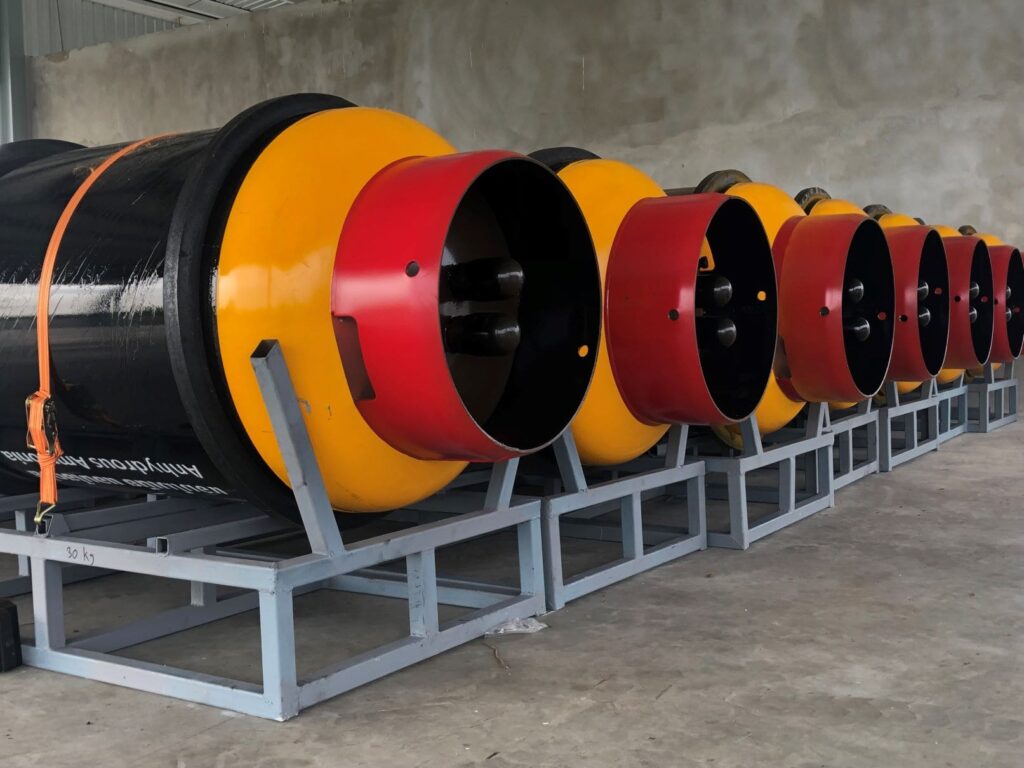
- Ton Tanks: 400 kg (Suitable for medium-scale industrial processes)
- Bulk Delivery: 8,000 kg via Tanker Truck (For high-volume continuous production)