


Trends in reducing the use of HCFCs refrigerants in Thailand (HCFCs Phase-Out Plan)
Refrigerants of the HCFC type, which are widely known and used, include HCFC-22 (or R22), used as a refrigerant in air conditioners and HVAC systems, and HCFC-141b (or R141b), used as an ingredient in foam production and as a cleaning agent for refrigeration systems, among others.
These HCFCs have relatively high Global Warming Potential (GWP) and Ozone Depletion Potential (ODP) values, and their impact on the environment has led many countries and organizations worldwide to focus on and campaign for the reduction, elimination, and cessation of the use of these ozone-depleting substances. This has resulted in the international cooperation treaty known as the “Montreal Protocol on Substances That Deplete the Ozone Layer.”
Thailand, as one of the 197 parties to the Montreal Protocol, has been implementing the HCFCs Phase-Out Management Plan Stage I. The Department of Industrial Works began setting import quotas for HCFCs in 2013 to comply with its obligations under the Montreal Protocol on Substances That Deplete the Ozone Layer, to which Thailand had ratified. This was also to meet the conditions for receiving funding from the Multilateral Fund under the Montreal Protocol for projects aimed at reducing and phasing out hydrochlorofluorocarbons. (Hydrochlorofluorocarbons)
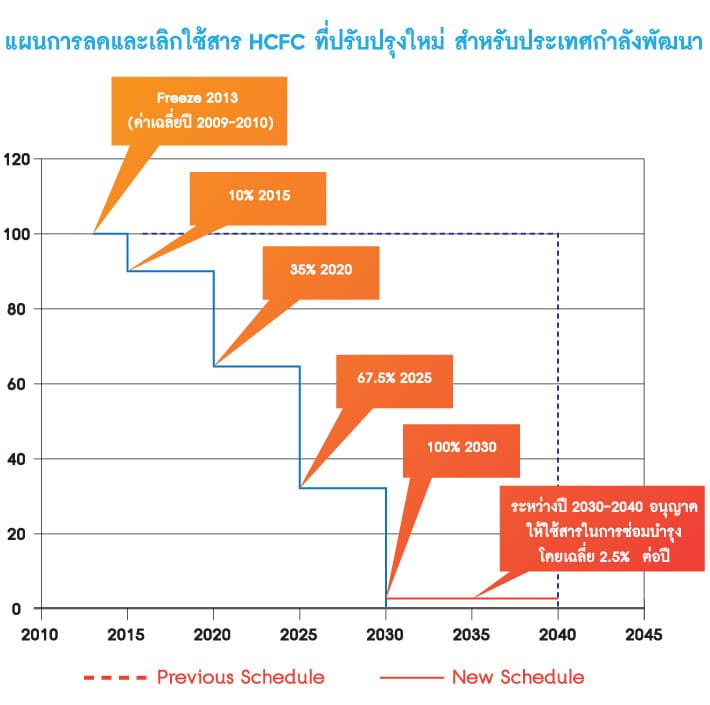
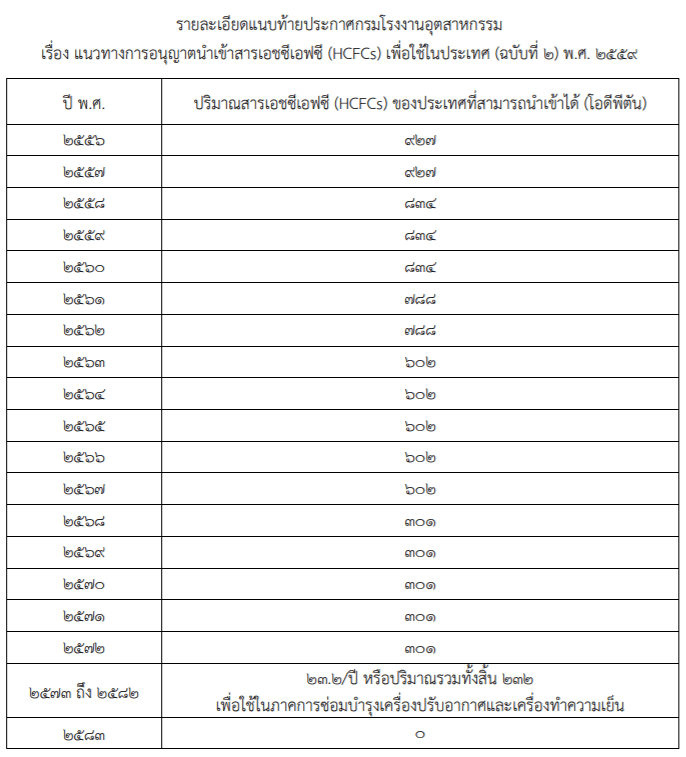
The goal is for Thailand to reduce its imports of HCFCs to just 2.5% of the average usage before the project began in 2030 (Figure 1), or 23.2 ODP tons/year, by 2030. This limit will be maintained for another 10 years before banning HCFC imports from 2040 onwards (Figure 2).
Furthermore, the Department of Industrial Works, Ministry of Industry, has established legal measures to control the production and usage of R22 refrigerants as follows:
- The use of R22 as a refrigerant in the production of air conditioners with a cooling capacity below 50,000 BTU for domestic use is prohibited from July 1, 2017 (production for export is still permitted).
- The use of R141b or compounds containing R141b is prohibited in all types of foam production processes, except for spray foam production, from July 1, 2017.
- The import of air conditioners using R22 refrigerant with a cooling capacity below 50,000 BTU is prohibited from March 31, 2018 (larger units than 50,000 BTU can still be imported).
In the next section, we will discuss the trends in reducing the use of HFC refrigerants in Thailand, such as R32, R134a, R125, R152a, R410A, R404A, etc. This will come into effect in 2024, or approximately 5 years from now, giving us time to prepare and adapt our production processes and refrigerant selection to the current situation.
Reference:
- Ozone Conservation Group, Hazardous Substances Management Division
Announcement of the Department of Industrial Works - Regarding Guidelines for Permitting the Import of HCFCs for Domestic Use (No. 2), B.E. 2559 (2016)